
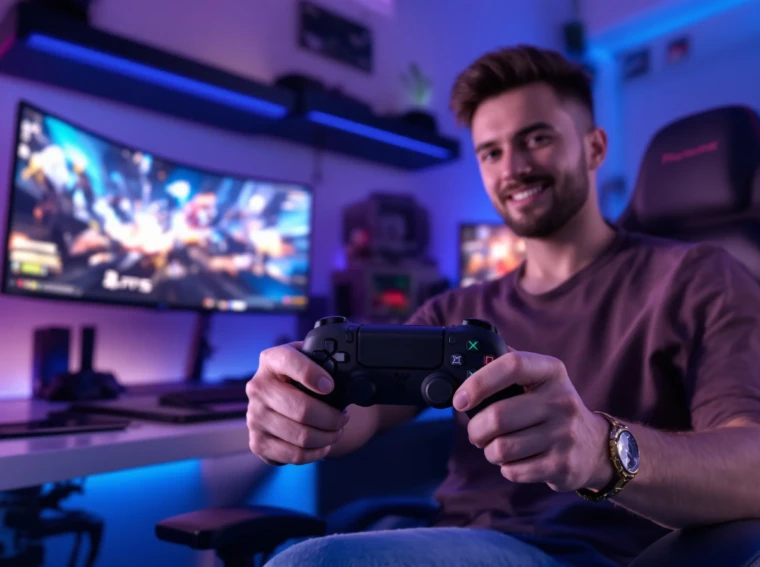
Picture this: You’re sitting at your desk, PS5 controller in hand, ready to play your favorite PC game. You want that smooth, wireless freedom—no tangled cords, no awkward reach. But connecting a Bluetooth PS5 controller to PC can feel like a secret handshake nobody taught you. If you’ve ever fumbled through settings, watched your controller blink in confusion, or wondered if you’re missing something obvious, you’re in the right place. This guide will show you exactly how to connect your Bluetooth PS5 controller to PC, what to expect, and how to fix the weird stuff nobody warns you about.
Why Use a Bluetooth PS5 Controller on PC?
Let’s be honest: Keyboard and mouse are great, but sometimes you just want to lean back and play. The PS5 DualSense controller feels fantastic—those adaptive triggers, the haptic feedback, the weight in your hands. Connecting your Bluetooth PS5 controller to PC lets you bring that console comfort to your Steam library, emulators, or even cloud gaming. Plus, no wires means you can game from the couch, the bed, or wherever you want.
Who Should (and Shouldn’t) Use Bluetooth?
If you hate input lag or play competitive shooters, Bluetooth might not be your best friend. Wired connections are faster and more reliable. But if you play single-player games, platformers, or just want to chill, Bluetooth is perfect. Here’s the part nobody tells you: Bluetooth can sometimes drop the connection or miss a button press, especially if your PC’s Bluetooth adapter is old or cheap. If you’re okay with that trade-off, keep reading.
What You Need Before You Start
- A PS5 DualSense controller (obviously)
- A PC with Bluetooth (built-in or USB adapter)
- Windows 10 or 11 (older versions might work, but expect headaches)
- Optional: Steam or DS4Windows for better compatibility
Here’s a quick tip: If your PC doesn’t have Bluetooth, you can grab a USB Bluetooth adapter for under $15. Just make sure it supports Bluetooth 4.0 or higher.
How to Connect Your Bluetooth PS5 Controller to PC
Step 1: Put Your Controller in Pairing Mode
Hold down the PS button and the Create button (the one left of the touchpad) at the same time. The light bar will start flashing blue. That’s your controller saying, “I’m ready to pair!”
Step 2: Open Bluetooth Settings on Your PC
On Windows, click the Start menu, type “Bluetooth,” and select Bluetooth & other devices settings. Click Add Bluetooth or other device, then choose Bluetooth.
Step 3: Pair the Controller
Your PC will search for devices. Look for “Wireless Controller” in the list. Click it. If it asks for a PIN, just enter 0000. The light bar should turn solid, and you’re connected.
Step 4: Test the Connection
Open a game or Steam’s Big Picture mode. Move the sticks, press some buttons. If everything works, you’re golden. If not, don’t panic—keep reading.
What to Do If Your Bluetooth PS5 Controller Won’t Connect
Sometimes, things get weird. Maybe your controller won’t show up, or it connects but doesn’t work in games. Here’s why:
- Your Bluetooth adapter is too old or doesn’t support HID devices
- Windows needs a restart (classic fix, still works)
- Another device is already paired with your controller
- Steam or DS4Windows isn’t set up right
Try unpairing and pairing again. If that fails, plug in the controller with a USB cable, let Windows recognize it, then unplug and try Bluetooth again. Sometimes, you just need to show your PC who’s boss.
Making the Most of Your Bluetooth PS5 Controller on PC
Steam Users: Easy Mode
Steam has built-in support for the PS5 controller. Open Steam, go to Settings > Controller > General Controller Settings, and check “PlayStation Configuration Support.” Steam will recognize your controller, and you can remap buttons, adjust sensitivity, and even use the touchpad for mouse input.
Non-Steam Games: DS4Windows to the Rescue
Some games don’t play nice with the DualSense. Download DS4Windows. It tricks your PC into thinking your PS5 controller is an Xbox controller, which most games love. Install it, follow the setup, and you’re good to go.
What About Haptics and Adaptive Triggers?
Here’s the truth: Most PC games don’t support the DualSense’s fancy features over Bluetooth. You’ll get basic rumble, but not the full adaptive trigger magic. Some newer games (like Metro Exodus Enhanced Edition) support these features, but only with a USB connection. If you want the full experience, plug in your controller.
Common Problems and How to Fix Them
- Laggy input: Move closer to your PC, or try a better Bluetooth adapter.
- Controller disconnects randomly: Update your Bluetooth drivers. Cheap adapters are often the culprit.
- Games don’t recognize the controller: Use Steam or DS4Windows. Some games need extra help.
- Battery drains fast: Turn off the light bar in Steam’s controller settings, or plug in when you can.
If you’ve ever wanted to throw your controller across the room, you’re not alone. Bluetooth can be finicky, but patience (and a few driver updates) usually wins.
Bluetooth PS5 Controller to PC: Pro Tips
- Keep your controller updated. Connect it to a PS5 occasionally for firmware updates.
- Buy a name-brand Bluetooth adapter. Cheap ones cause headaches.
- Charge your controller fully before long sessions. Bluetooth hates low batteries.
- Use Steam’s Big Picture mode for the smoothest experience.
- Don’t be afraid to use a cable if Bluetooth acts up. Sometimes, old-school is best.
Final Thoughts: Is Bluetooth Right for You?
If you want freedom, comfort, and a little bit of that next-gen magic, connecting your Bluetooth PS5 controller to PC is a game-changer. It’s not perfect—sometimes it’s stubborn, sometimes it’s smooth. But once you get it working, you’ll wonder how you ever gamed any other way. If you’re a competitive player or crave every feature, stick with a cable. For everyone else, Bluetooth is the ticket to a more relaxed, couch-friendly PC gaming life.
So grab your controller, fire up your PC, and enjoy the best of both worlds. And if you run into trouble, remember: You’re not alone. Every gamer has been there. Now you know the secrets to making your Bluetooth PS5 controller to PC connection work like a charm.