


Anyone who has watched a US train carriage at seven in the morning will already know what the new normal looks like. A row of commuters, each tilted slightly forward over a personal screen, headphones in, thumbs moving in tight repeated patterns. Some are running quick rounds of a roguelike, some are clearing daily quests in a free-to-play strategy title, some are flicking through a portable PC handheld they bought during a Steam sale. The picture has shifted significantly in just two years. Where 2023 still looked like a mobile-only commute, 2026 has become a mosaic of mobile, handheld, and increasingly an extra category that did not really exist in this everyday rhythm a decade ago: short sessions of real-money casino play that fit between subway stops as easily as a five-minute mini-roguelike.
The shift is not loud, and it is not dramatic. It looks more like a small reshuffling of the deck. The American mobile gaming market is on track for around 32 billion dollars in revenue this year, with adult gamers averaging more than three hours a day across mobile and handheld surfaces. Inside that share, micro-sessions under fifteen minutes now make up well over half of all play. Real-money casino apps and browser sites in the seven states where they are licensed have moved into exactly that micro-session window, joining the same daily routine as a quick Steam Deck round or a Switch 2 sleep-mode resume. For a handheld-focused audience, this is not really a story about gambling. It is a story about how a new category of leisure software is shaping up to look, feel, and behave a lot like the portable gaming ecosystem that this audience already knows by heart.
Anyone who wants to see what the licensed end of that micro-session market actually looks like in 2026 can browse PlayUSA, a long-running US comparison portal that maps which licensed real-money casinos and sportsbooks are live in each state, what the welcome offers look like this season, and how each operator stacks up on mobile responsiveness. The portal is mobile-first by default, which is itself a signal that the audience for this content is already swiping on phones and handhelds rather than sitting at a desk.
How the 2026 US handheld lineup actually shapes commute time
The portable hardware story in the United States in 2026 is not really about a single device. It is about the way three or four well-established platforms quietly cover almost every commuter scenario. The Steam Deck OLED handles the heavier PC catalog with a 50 watt-hour battery that lasts roughly six to seven hours on lighter indie titles and three and a half on the heavier AAA stuff. The Nintendo Switch 2, which launched in mid-2025, has settled into a 52 watt-hour cell that quietly outpaces the Deck on efficient first-party games and now anchors most American commute photos you see online. The ROG Ally X carries a much larger 80 watt-hour cell and prioritizes 120Hz play, so it eats more power for a smoother feel. The Lenovo Legion Go takes a different swing with detachable controllers. Across all four, the average actual session length on US public transit sits around twenty-two minutes, and that twenty-two-minute number is the most important figure in this entire piece, because it sets the upper bound on every other category that wants a slice of the same commute window.
Why micro-session design has become the dominant design grammar
Spend any time looking at the top fifty US mobile titles in 2026 and a single design grammar repeats with quiet discipline. Quick-resume from sleep state, save anywhere, an aggressive cap on initial tutorial length, daily login loops scaled to under three minutes, and an almost universal cross-save layer that keeps a session portable between phone and any second screen at home. The reason for this discipline is purely structural. American adult gamers play roughly three hours and twelve minutes a day on average, and over half of those minutes happen in slices under fifteen minutes long. A title that demands a forty-minute warm-up before it gets fun cannot survive in this routine, because the routine itself is built around fragments. The fragments are not new in 2026, but the design grammar has finally caught up. Almost every mobile and handheld title released this year reads as if it was tuned for a single seven-minute subway leg, and the apps that ignore that constraint quietly lose ground every quarter.
Where real-money casino play actually fits inside the routine
Real-money casino apps and browser sites are now licensed in seven US states by 2026, with New Jersey leading on volume, Pennsylvania, Michigan, West Virginia, Connecticut, and Rhode Island filling the rest of the active map, and Delaware joining last year. Total real-money mobile activity across this group is moving past eight billion dollars, with mobile play comprising more than three-quarters of all sessions. The session length number is the part that interests this site most. Average mobile slot or table sessions land between seven and twelve minutes, which is shorter than the twenty-two-minute handheld session and roughly identical to the seven-minute subway leg that most of the design grammar in section two is tuned for. In other words, real-money casino play is not competing with handheld play for the same time slot. It is competing with the other micro-session categories, the quick rounds of mobile puzzle games, the daily login loop in a gacha, the two-minute idle clicker check-in. That is why it folds into the same routine without much friction.

What the actual hardware shelf looks like in a US gamer’s bag in 2026
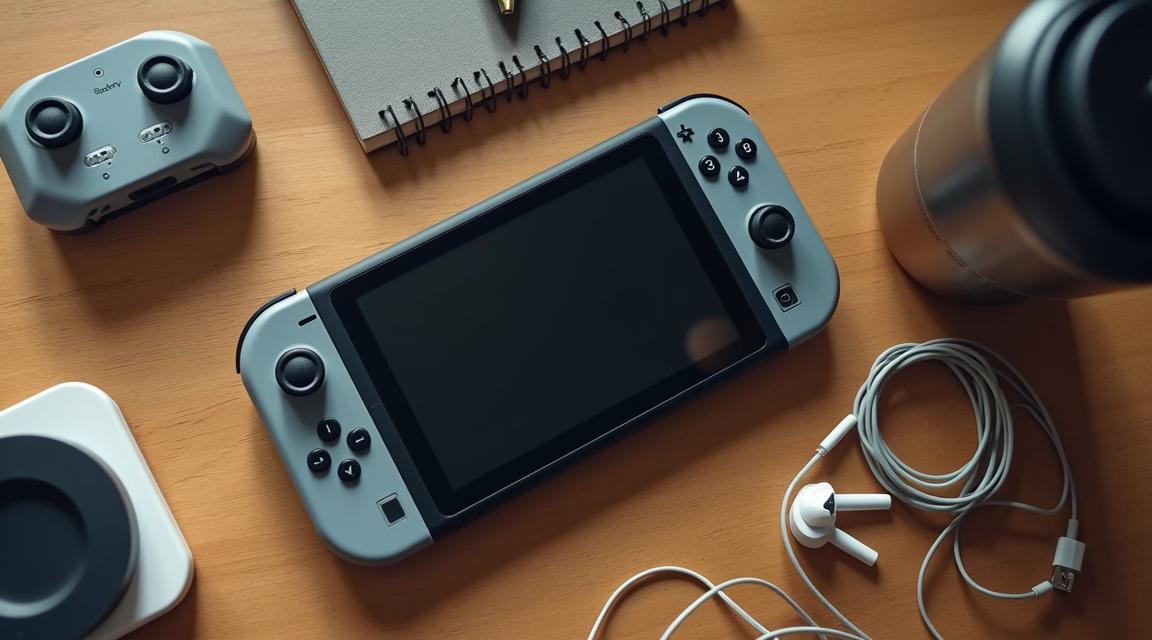
The kit a US gamer carries in a typical 2026 backpack has narrowed and stabilized after a couple of noisy hardware years. A flagship phone with a six-point-eight inch screen sits as the always-on layer, paired with wired or low-latency wireless earbuds. A handheld sits as the dedicated layer, usually a Steam Deck OLED, a Switch 2, or one of the Windows handhelds. A mid-sized power bank sits as the safety net, because no portable on the market right now reliably hits a full eight-hour shift on the heavier end of the catalog. A clip-on controller for the phone, usually a Backbone or a Razer Kishi, sits as the optional fifth piece for anyone who has stopped trusting their thumbs after fifteen minutes of swipe combat. A practical rundown of seven leading portable consoles on this site walks through where each of those handhelds lands on weight, battery, and game catalog, and the takeaway is consistent with what bag-photos on social media show. Most US commuters who take portable gaming seriously now carry exactly two screens, the phone and one handheld, and the rest of the bag is built around keeping those two screens topped up across a full work day.
Why mobile-first interfaces have stopped feeling like compromises
There was a long stretch through the late 2010s when a mobile interface meant something stripped down. A small subset of features, fewer settings, awkward keyboard input, and a quiet expectation that the desktop site was the real product. That stopped being true sometime around 2024, and by 2026 it is hard to find a serious leisure app in any category whose phone build is not the lead build. Streaming dashboards, fitness trackers, calendar tools, even tax software, all default to a mobile-first design and treat desktop as the secondary surface. Real-money casino portals belong squarely inside this group. The licensed operators in the seven legal states all run progressive web apps or native mobile apps with one-tap deposits, biometric login, and geo-KYC that completes in well under a minute. Whatever you think of the category as leisure content, the interface design itself sits in the same family as a modern mobile RPG or a portable gaming launcher, and that shared design family is exactly why the category folds so cleanly into a handheld-aware routine.
What dedicated handheld hardware still does that phones cannot
It is easy to assume the phone wins this comparison, since it is always in the pocket, always charged, and always running. The actual answer is more layered, and the IGN rating of the Steam Deck OLED from late 2023 still reads in 2026 as the cleanest summary of why a dedicated portable continues to matter. Tactile sticks, real shoulder triggers, a bigger battery, a screen tuned for landscape grip, and a thermal envelope that lets a heavier game run for an hour without throttling, those four hardware advantages have not been displaced by even the strongest 2026 phone. What has shifted is the boundary between use cases. Phones now win the under-five-minute window, handhelds own the fifteen-to-thirty-minute window, and a desktop or console at home picks up anything longer. Once you accept that a single device cannot serve every window equally, the carry-two-screens routine in section four stops looking redundant and starts looking like a sensible piece of personal infrastructure.
Cross-save, cloud sync, and the quiet end of the device boundary
If there is one feature that has done the most quiet work in 2026 to fold these categories into a single routine, it is cross-save. Roughly nine in every ten of the top fifty US mobile titles now support some form of cloud sync, up sharply from a couple of years ago. The Steam Cloud covers nearly the entire Steam Deck library in practice, the Switch 2 Nintendo Account covers most first-party titles, and any serious mobile launcher has its own sync layer running in the background. Real-money casino accounts behave the same way. A player can deposit on a phone during a morning commute, swap to a tablet at lunch, and resume the same wallet from a laptop at home, with the operator handling identity verification once and trusting the same session token across surfaces. The end result is that the device boundary, which used to be a hard line in a player’s day, now blurs almost completely. The session is what persists, not the screen.
Three habits that distinguish the 2026 US mobile gamer
After two years of watching this routine settle, three behavioral habits stand out as the distinguishing markers of the 2026 US mobile gamer. The table below collects the three habits, the time window they fit, and why each habit reshapes the broader leisure routine.
|
Habit |
Typical window |
Why it matters in 2026 |
|
Two-screen carry |
All day |
Phone for under-five-minute slots, handheld for the fifteen-to-thirty-minute slots, no overlap or wasted weight |
|
Quick-resume by default |
Every transition |
Sleep state on Switch 2 and Steam Deck, plus cross-save on phones, makes a paused session resumeable across surfaces |
|
Mixed leisure stack |
Evening |
A single evening can include a handheld JRPG, a phone idle game, and a ten-minute licensed real-money round, all from the same couch |
These three habits do not look revolutionary in isolation. What makes them notable is the way they reinforce each other. Two-screen carry only makes sense once quick-resume removes the friction of bouncing between devices. Quick-resume only justifies itself when the leisure stack is varied enough to ask for it. The mixed stack only stays balanced when neither device feels like a compromise, which is what the hardware lineup in section one quietly delivers.
What this fold-in actually changes about the next two years
The most useful way to read all of this is not as a story about a single category gaining ground. It is a story about how the routine itself has gotten more porous. The 2026 US mobile gamer routine is no longer organized around a primary device with a few add-ons. It is organized around the time window, with whichever device fits the window taking the slot. A seven-minute subway leg picks up a phone session, which might be a quick puzzle, a daily login, or a licensed real-money round in a state where it is permitted. A twenty-minute lunch break picks up a handheld session, which is almost always a console-quality game from the Steam Deck or Switch 2 catalog. A two-hour evening picks up the desktop or the TV, with the handheld in sleep mode on the couch arm in case the player needs to step out for ten minutes. The result is that the leisure stack feels less like a hierarchy and more like a wardrobe. The implication for the next two years is that any developer, publisher, or operator who wants a piece of this routine has to design for the time window first, the device second, and the platform identity a distant third. The titles that pull this off, whether they are first-party Nintendo releases, indie roguelikes, or licensed casino apps in legal states, will sit comfortably inside the routine. The titles that ignore the window will keep losing ground every quarter, regardless of how much marketing they pour on top.