

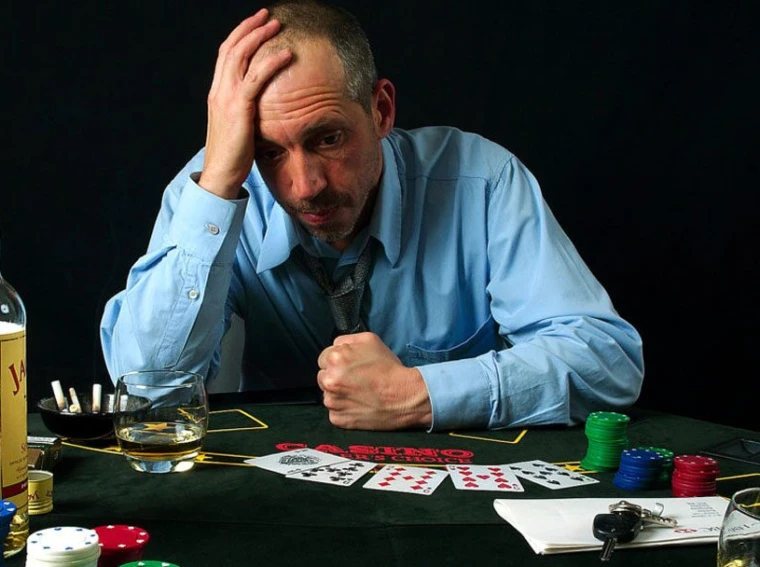
Every business has its best customers, the loyal few who spend the most and keep the lights on. In the gambling industry, that familiar truth carries a darker edge, because a casino’s most valuable customers are very often also its most harmed.
Decades of research keep reaching the same finding: a small minority of heavily involved players, many of them problem gamblers, generate a hugely disproportionate share of the money that crosses gaming floors. That single fact shapes how the industry is built, how it markets itself and why meaningful reform is so fiercely resisted.
The Numbers Behind The Business
The clearest evidence comes from Australia, a country that loses more money to gambling per head than any other on earth. When its Productivity Commission examined the poker machine industry, the figures were stark enough to reshape the national debate. Australians lose tens of billions of dollars every year, so how those losses are distributed among players is far from an academic question.
The Commission estimated that problem gamblers, a small fraction of all players, accounted for around 40 per cent of the money lost on the machines. Add in those at moderate risk and the share of losses coming from harmed players climbs to well over half.
Broken down, the concentration is hard to ignore:
|
Group |
Share of poker machine losses |
|
Problem gamblers |
Around 40% (estimates range from 22% to 60%) |
|
Moderate-risk gamblers |
An additional 20% or so |
|
Everyone else |
Less than half of losses combined |
The same pattern shows up across the wider industry, from betting shops to online platforms where players often look for promotions such as the Hidden jack casino no deposit bonus before signing up. That is why reputable, licensed operators are expected to provide responsible gambling tools, including deposit limits and self-exclusion. The Commission also estimated that roughly a third of all gambling revenue flows from problem gambling alone.
Why A Few Players Matter So Much
The reason a minority can dominate the takings comes down to a simple arithmetic of frequency and intensity. Casual gamblers drop in occasionally, wager modestly and leave, whereas a heavily involved player may visit constantly, stay for hours and bet at a pace that dwarfs everyone around them.
Problem gamblers in particular tend to play more often and for far longer sessions than recreational players, which makes them hugely overrepresented on any gaming floor at any given moment. A single such customer can lose in a week what a casual visitor loses in a year.
From a purely commercial standpoint, that turns the heaviest players into the ones worth chasing hardest. Their spending is not only large but unusually reliable, since compulsion produces a steadiness of custom that ordinary entertainment rarely matches, and the entire revenue model quietly leans on it. A venue could lose a hundred casual customers and barely notice, yet losing a single compulsive high roller might dent its takings for the whole month.
How The Industry Cultivates Them
Once a business knows where most of its money comes from, it is only logical to protect and nurture that source. Casinos have become expert at identifying their highest spenders early and binding them ever more tightly to the venue.
The tools used to cultivate high-value players are well established:
- Personal hosts — dedicated staff who build a relationship and keep a big spender coming back.
- Comps and perks — free rooms, meals, flights and event tickets scaled to how much a player loses.
- VIP schemes — exclusive tiers, bonuses and cashback aimed squarely at the heaviest bettors.
- Data tracking — loyalty cards and online accounts that map how much, how often and how late a person plays.
- Targeted offers — tailored promotions and reload bonuses timed to pull a lapsing player back in.
None of this is illegal, and much of it mirrors ordinary loyalty marketing, yet applied to gambling it can tip into actively encouraging people who are already losing more than they can afford. Increasingly the identification is automated, with algorithms scanning play data to spot a rising spender and flag them for special attention long before any host makes contact. Regulators in several countries have fined operators for lavishing VIP treatment on customers who showed obvious signs of harm.
Engineered To Keep Them Playing
Beyond the personal attention sits the hardware itself, and the most profitable machines are designed to maximise the time and money spent on them. Poker machines and online slots are widely regarded as the most harmful gambling products, precisely because they are so effective at holding a player in place.
The Machines Built For Long Sessions
Modern machines lean on a toolkit of psychological features, from near misses that mimic the jolt of almost winning to losses disguised as wins, where a spin that actually loses money is dressed up with celebratory lights and sound. Each is engineered with millions of possible outcomes, which makes the next result impossible to predict and easy to keep chasing.
The economics underneath are unforgiving, since a machine set to return, say, 87 per cent to players keeps 13 per cent of everything wagered over time. The longer a session runs, the more surely that edge grinds a bankroll down, which is exactly why the design works so hard to extend it.
The Human Cost
Framed as revenue, all of this can sound almost clinical, but the money lost by the heaviest players represents real and often severe harm. Behind the takings sit damaged finances, strained relationships and serious mental-health tolls, frequently concentrated among those who can least afford them.
Research in Australia has found that gamblers in low-income households spend a far greater share of their income than wealthier ones, with problem gamblers in the poorest homes losing a punishing portion of their disposable income. The damage rarely stays contained, since it ripples outward to partners, children and whole families.
Compounding the problem, the great majority of people in trouble never ask for help, with only a small fraction of problem gamblers ever seeking counselling or support. Many hide the extent of their losses for years, which means the customers a casino values most are often the ones suffering most quietly. The Productivity Commission put the wider social cost of problem gambling in the billions of dollars a year, a figure that folds in bankruptcies, lost jobs and family breakdown.
The Push To Change
None of this has gone unnoticed, and pressure on the industry to reduce harm has grown steadily. Because effective safeguards inevitably cut into revenue that depends on heavy losses, reform tends to be slow and hard-fought, yet a range of measures now aims to loosen the reliance on harmed players.
The main protective measures include:
|
Measure |
How it is meant to help |
|
Deposit and loss limits |
Cap how much a player can put in over a set period |
|
Self-exclusion |
Let people bar themselves from venues or online accounts |
|
Pre-commitment systems |
Ask players to set binding limits before they start |
|
VIP scheme rules |
Restrict how operators can reward and target heavy spenders |
|
Affordability checks |
Require operators to question spending that looks unsustainable |
None of these tools is perfect, and determined players can often work around the softer ones, yet together they mark a slow shift away from a model that quietly profited from the very people it harmed. Public attitudes have shifted too, and gambling harm is now treated far more as a public-health issue than a simple matter of personal willpower. The direction of travel, at least, is toward putting player welfare ahead of a handful of ruinous accounts.
The Cost Behind The Custom
The idea that problem gamblers are a casino’s most valuable customers is not a slur but a documented feature of how the industry earns its money. When a large share of revenue flows from a small group of heavily harmed players, the commercial incentive to keep them playing sits in direct conflict with their wellbeing.
Recognising that tension is the first step toward a fairer system, and toward spotting the warning signs in oneself or in others. Anyone worried about their own gambling, or someone else’s, can find free and confidential support through Gambling Help Online in Australia, or services such as GamCare and the National Council on Problem Gambling elsewhere, and reaching out early is always easier than waiting.
FAQ
What share of gambling revenue comes from problem gamblers?
Estimates vary, but Australia’s Productivity Commission put problem gamblers at around 40 per cent of poker machine losses and roughly a third of total gambling revenue, with moderate-risk players adding a large share more.
Why are heavy gamblers so valuable to casinos?
They play far more often and for much longer than casual visitors, losing sums a recreational gambler never would. Their spending is large and reliable, which makes them the customers operators work hardest to keep.
How do casinos encourage their biggest spenders?
Through personal hosts, comps, VIP schemes and targeted offers, all guided by detailed tracking of how much and how often someone plays. Regulators have fined operators for aiming this at clearly harmed players.
What is being done to reduce the harm?
Measures like deposit limits, self-exclusion, pre-commitment and affordability checks aim to curb losses. They cut into revenue, so progress is slow, but the focus is gradually shifting toward player welfare.