

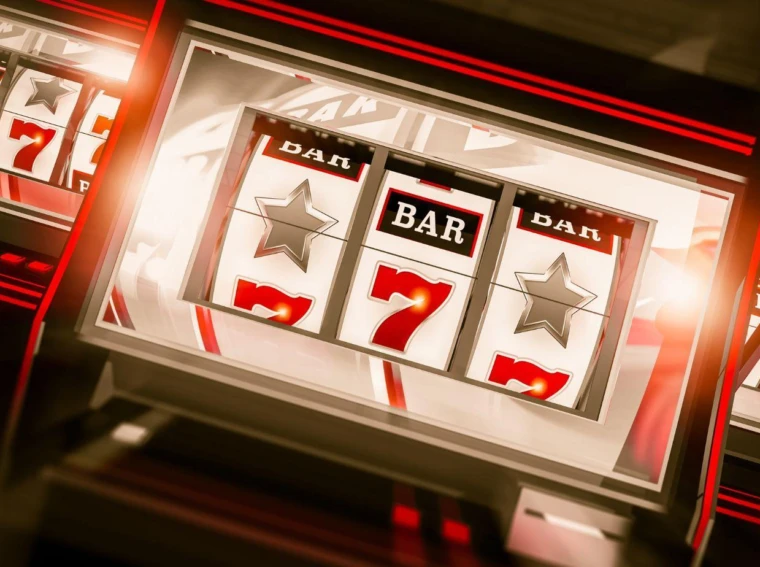
Loot boxes, gacha banners and slot machines run on the same three ideas: variable-ratio rewards, variance, and the near-miss. Here's the math every gamer should know.
By John L. Ensbruck: Lead Game Mathematician & Mechanics Auditor, SlotZone Lab.
Here's an uncomfortable thing to say to a room full of gamers: you have almost certainly played a slot machine. It just wasn't shaped like one. It was a loot box with a cinematic unboxing animation, or a gacha banner with a shimmering "rate-up" character, or a card pack that fanned open in slow motion. The chassis changes. The engine underneath has been running, more or less unchanged, since the first mechanical slot in the 1890s.
That's not a moral accusation – plenty of games use these systems responsibly, and randomized rewards can be genuinely fun. It's a design observation. Three mathematical ideas power nearly every reward system in modern gaming, and all three were refined to a razor's edge by slot designers decades before the word "gacha" existed. Understanding them makes you a sharper player and a much harder person to manipulate.
Idea one: the variable-ratio schedule
In the 1950s, psychologist B.F. Skinner tested how different reward patterns changed behavior. The finding that matters here: rewards delivered after an unpredictable number of actions produce the most persistent, most repeated behavior of any schedule he tested – more than rewarding every action, more than rewarding on a fixed count. Uncertainty is the accelerant.
This is the variable-ratio reinforcement schedule, and it is the beating heart of a slot machine. You don't know if this spin pays. You might hit on the next pull, or the fiftieth. That "might" is the entire hook.
Now look at a loot box. You don't know if this box holds the legendary skin. You might get it now, or after thirty more. A gacha ten-pull is the same schedule wearing anime clothes. The design isn't a coincidence or a borrowing — it's convergent evolution toward the same mathematical optimum for keeping a person pulling the lever.
Idea two: variance is the feel of the game
Two reward systems can have the identical average payout and feel completely different to play. The reason is variance – the spread of outcomes around that average.
A low-variance system pays small rewards often. You win a little, frequently; the ride is smooth and the dry spells are short. A high-variance system pays rarely but big. Long stretches of nothing, punctuated by a jackpot. Same long-run average, wildly different emotional texture.
Gamers know this intuitively even if they've never named it. A gacha banner where the top character has a punishing pull rate is a high-variance system: brutal droughts, euphoric hits. A card game where most packs give you something useful is low-variance. Slot designers have a precise vocabulary for exactly this trade-off, and it's worth understanding how volatility and variance actually differ, because the distinction quietly governs how a reward system will feel long before you've pulled enough times to notice. When a game adds a "pity" system – guaranteed reward after N failures – it isn't being generous. It's capping the downside tail of the variance curve because unbounded high variance drives players away in frustration. It's variance management, dressed up as mercy.
Idea three: the near-miss is engineered, not accidental
This is the subtlest of the three, and the most deliberate. A near-miss is an outcome that falls just short of a win – two jackpot symbols on the payline and the third one landing a single position off. Mechanically, it's a loss. Neurologically, it isn't quite treated as one; a near-miss lights up reward-related circuitry almost the way a real win does, and it measurably increases the urge to keep going.
Slot designers don't leave near-misses to chance. Reels are weighted so that "so close" outcomes appear more often than pure probability would produce. It feels like you're on the verge. You are not – you're inside a system tuned to make the verge feel permanent.
Gaming is full of the same move. The gacha counter that stops one short. The loot reveal that shows a rare glow before settling on a common. The card pack that saves its best-looking animation for a card you didn't quite want. None of that is neutral presentation. It's the near-miss, and it works on your brain whether or not you know its name. This is where understanding the psychology of these reward loops stops being trivia and starts being a genuine defense — the mechanics only have power while they're invisible.
Why a gamer should care
The point isn't to swear off every randomized system. Randomness can be delightful; the surprise of a good pull is a real, legitimate pleasure, and games have used it well for decades. The point is literacy. Once you can name the variable-ratio schedule, read the variance, and spot the engineered near-miss, the machine loses its most important advantage — which was that you couldn't see it working.
A literate player asks better questions. What's the actual pull rate, not the vibe of it? Is this system high-variance enough to torch my budget on a bad run? Is that "almost" real, or is it a tuned illusion designed to sell me one more pack? Those questions don't make games less fun. They make you the one deciding when to stop, instead of a schedule deciding for you.
The slot machine spent a century perfecting how to hold attention with nothing but math and timing. That knowledge didn't stay in the casino — it moved into the games we play for love, not money. The best thing you can do about it is the same thing the designers did: understand the math. Then play on your own terms.
About author
John L. Ensbruck is Lead Game Mathematician and Mechanics Auditor atSlotZone Lab,, where he analyzes the probability models, variance curves, and RNG mechanics behind casino and reward-based games. His work focuses on mathematical statistics, game theory, and algorithmic analysis of how reward systems are actually built.