

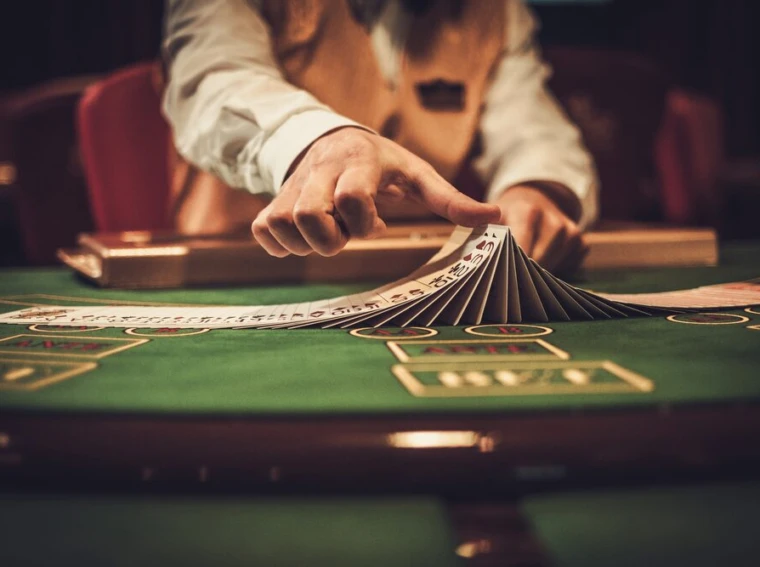
Spin an online slot and, whatever the animation, you are really watching a piece of software make an instant decision in silence. Join a live dealer table and something shifts entirely, as a real person greets you, shuffles real cards and deals them in front of your eyes.
That difference is not just cosmetic. Live dealer games feel dramatically more real than slots, and the reasons come down to a blend of genuine technology and some well-studied quirks of human psychology.
Two Very Different Machines
On the surface both are simply online casino games, but underneath they work in completely opposite ways. A standard slot or table game is driven by a random number generator, a piece of certified software that decides each result in a fraction of a second. The whole outcome is settled before any animation plays, and the spinning reels are simply a way of presenting a decision that has already been made.
A live dealer game throws that model out. Every outcome is produced by a physical action in the real world, a card pulled from a shoe or a ball dropped onto a spinning wheel, then streamed to your screen as it happens.
The same studio technology now sits behind the live tables at licensed operators such as Elite spin casino, where the published rules and returns sit alongside a stream you can actually watch. That combination of openness and visible action is the root of everything that makes the format feel authentic.
Inside The Studio
Live dealer games almost never come from a crowded casino floor. They are broadcast from purpose-built studios run by specialist providers such as Evolution, Pragmatic Play Live and Playtech, spaces designed for one job only, which is to stream a game clearly to your device.
Nothing in these rooms is left to chance. Professional broadcast lighting, multiple high-definition cameras and tables engineered for filming are all calibrated so that every card and every number stays sharp on any screen, from a large monitor to a phone.
Access is tightly restricted, staff follow strict protocols, and every session is recorded and stored so that any dispute can be audited later. The polish you see is the product of a controlled television studio, not a lucky camera angle on a busy floor.
These studios now run round the clock, staffed by dealers working in shifts so a table is always open whatever the hour or time zone. Some providers even build themed rooms and game-show style formats, blending the classic casino table with the look of live television to hold a modern audience.
The Tech That Makes It Work
Turning a physical table into a smooth digital game takes a stack of clever technology working in concert. Most players never notice any of it, which is precisely the point.
A handful of core systems do the heavy lifting:
|
Technology |
What it does in a live game |
|
HD and 4K cameras |
Capture every shuffle and spin from several angles in a purpose-built studio |
|
Optical Character Recognition |
Reads each card and wheel result and turns it into on-screen data instantly |
|
Game Control Unit |
Encodes the video and links your digital bets to the physical table |
|
RFID chips |
Tag cards and chips so outcomes can be cross-checked and verified |
|
Low-latency streaming |
Keeps the delay under about a second so decisions happen in real time |
The piece that quietly holds everything together is optical character recognition, which reads each physical outcome and converts it into data the instant it happens. Paired with low-latency streaming that keeps the delay under a second, it means the result you see on screen matches the real table in near real time, fast enough to make timed blackjack and roulette decisions feel natural. Much of that speed now comes from edge computing, which processes the video close to both the studio and the player, and the rise of fast mobile networks means the same table works just as well on a phone on the move as on a desktop at home.
Why It Feels So Real
The technology explains how the stream reaches you, but not why it lands so differently in the mind. That part is pure psychology, and several forces pull in the same direction at once.
The realism comes from a few distinct sources:
- A human presence — watching a real dealer taps into social instincts that a silent reel never touches.
- Visible outcomes — seeing the card turn or the ball drop feels far more concrete than a number appearing.
- Real-time pace — the natural rhythm of a dealt hand mirrors the tempo of a physical casino.
- Social interaction — a chat box the dealer answers out loud breaks the isolation of ordinary online play.
- Atmosphere — the lights, sounds and setting recreate the mood of a real venue at home.
Stacked together, these turn a solo transaction into something closer to an event, which is why a live table can hold a player’s attention in a way a slot rarely manages. The presence of another person changes the entire texture of the experience. Watching a physical object move, a card turning or a ball settling, also anchors the result in the real world, where a number simply appearing on a screen can feel abstract and forgettable by comparison.
Trust You Can Actually Watch
Beyond atmosphere, the single biggest driver of the live format’s appeal is trust. Both types of game are fair when properly licensed, but they ask you to believe it in very different ways.
Seeing Versus Believing
With a slot, fairness is a matter of faith in mathematics, since you cannot see the random number generator at work and must rely on the fact that it has been independently certified. Nothing visible confirms the result, so trust is entirely abstract.
A live game flips that around. When you watch a dealer physically shuffle a deck and deal from it, the fairness is happening in front of you, and that visible honesty is deeply reassuring in a way no certificate can quite match. It is the same instinct that makes people trust a handshake more than a contract they have not read.
Real Feel, Same Odds
For all that immersion, it is worth being clear-eyed about what the realism does and does not change. Feeling more authentic is not the same as offering a better deal, and the underlying maths is largely unmoved.
A live roulette wheel carries the same house edge as its software cousin, and live blackjack pays out on the same rules, so the cost of playing is broadly identical. If anything the format is slower, since a human dealing cards produces fewer rounds per hour than a slot spinning on autopilot.
That slower pace can cut both ways. It means fewer decisions and less money moving through the house edge each hour, yet the sheer immersion of a live table can keep a player seated far longer than a slot would, which quietly offsets the difference.
More Than A Better Picture
Live dealer games feel more real than slots because, in a very concrete sense, they are. A physical action decides each result, a real person runs the table, and a chain of cameras, sensors and streaming technology delivers all of it to your screen in under a second, wrapped in the visible honesty that no algorithm can show you.
None of that alters the house edge, so the realism is best enjoyed as atmosphere rather than an advantage. Whichever format is on screen, the odds still favour the house, so anyone who finds their play becoming hard to control can seek free, confidential support from services such as GamCare or the National Council on Problem Gambling.
FAQ
How are live dealer games different from online slots?
Slots use a random number generator to decide results in software. Live dealer games stream a real person dealing cards or spinning a wheel, so every outcome comes from a physical action you can watch happen.
What technology makes live dealer games work?
Studios use HD cameras, optical character recognition to read the cards, a Game Control Unit to encode the feed, RFID tags and low-latency streaming that keeps the delay under about a second.
Are live dealer games fairer than slots?
Both are fair when licensed and tested. Live games simply make fairness visible, since you watch the shuffle and deal, whereas a slot’s random number generator has to be trusted rather than seen.
Do live dealer games have better odds than slots?
No. The house edge is essentially the same, and the rules match their software versions. Live tables are usually slower, but the immersion can keep players seated for longer sessions.