

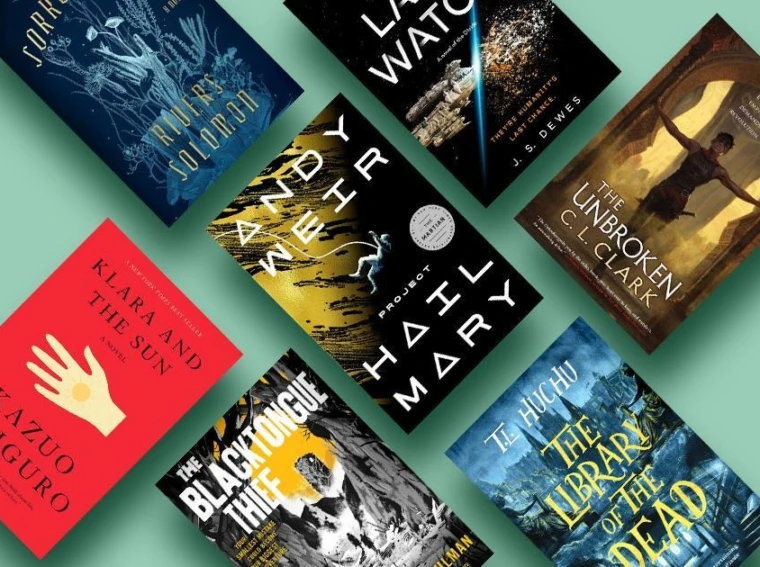
Stories build worlds. Games let us step inside them. Between these two forms lies a shared language of systems, tension, rules, and imagination. If you look closely at great fantasy and science fiction novels, you will see blueprints for compelling game design. Not code. Not engines. But structure.
Below are practical lessons that game designers can learn from speculative fiction — lessons about systems, characters, pacing, and player agency.
1. Build Clear Rules Before Breaking Them
Many successful fantasy worlds operate on strong internal logic. In The Lord of the Rings, magic is mysterious but not random. Power has limits. Artifacts like the One Ring follow rules. Those rules shape the conflict.
In A Song of Ice and Fire, political systems work like machines. Actions create consequences. Characters die because the world is consistent, not because the author wants shock value.
Game design thrives on this same principle.
Players need to understand:
- What they can do
- What they cannot do
- What it costs
Fantasy authors often spend years designing magic systems, political systems, or technological laws. Game designers should do the same with mechanics. Systems first. Spectacle later.
2. Make the World Feel Larger Than the Player
In Dune, the desert planet Arrakis feels ancient and alive. Cultures existed long before Paul Atreides arrived. The world does not revolve around him. It reacts to him. That is powerful design.
Many games fail because the world feels like a stage set built only for the player. NPCs wait forever. Cities never change. Nothing moves unless triggered.
Science fiction novels often imply deep history:
- Lost empires
- Ancient technologies
- Cultural myths
- Economic systems
This technique creates scale.
In games, this translates into:
- Environmental storytelling
- Dynamic ecosystems
- Background simulation
- Lore hidden in small details
When players believe the world exists beyond them, immersion increases. A Newzoo market report estimated that immersive open-world games retain players 35% longer than linear titles. Depth keeps attention.
A large world is not about map size. It is about perceived continuity.
3. Stakes Must Be Personal, Not Just Cosmic
Sci-fi loves big ideas. Galactic wars. AI revolutions. Planetary collapse. But readers stay for characters.
In The Hunger Games, the conflict is political and systemic. Yet the emotional core is Katniss protecting her sister. Without that, the spectacle becomes noise. Games often copy large-scale conflict but forget intimacy.
Effective game design asks:
- Why does this matter to the player?
- What personal risk exists?
- What emotional connection is at stake?
Even in vast universes, players need relatable motivation, and novels are a great source of inspiration. You can read free novels online that focus on finding a lost friend, reuniting a broken family, or fulfilling a promise. Why? Because online novels help develop the theme, enriching its characters and world. Looking for free online novels on a specific topic? FictionMe can help you find everything from novels about love between millionaires and ordinary people to stories about space adventures. Fantasy novels teach this well. Save the world, yes — but save someone specific first.
4. Limitations Create Creativity
In many fantasy stories, power comes with restrictions.
Magic requires sacrifice. Technology has side effects. Travel costs resources.
In The Name of the Wind, magic is mathematical. Energy must be conserved. There are rules of sympathy and consequence.
This is excellent design philosophy.
Unlimited player power destroys challenge. And challenge creates meaning.
Research in game psychology suggests that moderate difficulty increases player satisfaction by nearly 50% compared to very low difficulty modes. Struggle enhances reward.
Science fiction often frames limits as physics:
- Fuel constraints
- AI ethics boundaries
- Environmental hazards
Fantasy frames them as ritual, cost, or moral trade-off.
Game designers can borrow both. Restriction is not a weakness. It is structured.
5. Mystery Is Stronger Than Explanation
Some of the most memorable speculative fiction leaves space for ambiguity.
In Annihilation, the unknown remains unsettling because it is never fully explained. The mystery breathes.
In game design, over-explaining kills curiosity.
When everything is documented in menus and tutorials, discovery disappears.
Fantasy novels often use:
- Untranslated languages
- Half-told legends
- Unreliable narrators
These tools create layered understanding.
Games can replicate this with:
- Hidden mechanics
- Secret areas
- Environmental puzzles
- Incomplete lore
According to player behavior data from major RPG communities, hidden content significantly increases replay rates. Mystery multiplies engagement.
Not every system needs to be transparent.
6. Technology and Magic Reflect Society
Science fiction often uses advanced technology to explore real-world issues.
In Neuromancer, cyberspace is not just a cool idea. It mirrors corporate power and human alienation.
Fantasy does the same with magic hierarchies, royal bloodlines, and guild systems.
Game design can learn from this symbolic layer.
Mechanics should reflect the theme.
If your game is about inequality:
- Resources should feel unevenly distributed.
If your game is about survival:
- Scarcity must be real.
If your world is authoritarian:
- Player freedom might feel constrained early on.
When mechanics and narrative align, the experience feels unified.
Studies in interactive storytelling show that thematic consistency improves player immersion scores by up to 40%. Again, there are plenty of examples on the FictionMe app. Alignment matters.
7. Progression Should Change the World
In many fantasy novels, events leave marks.
Cities burn. Alliances shift. Characters age.
In The Stormlight Archive, wars reshape nations. Political maps evolve.
Games often struggle with permanence. After major quests, towns look identical. NPC dialogue resets.
Speculative fiction rarely resets.
Good progression design includes:
- Visible environmental changes
- Altered NPC behavior
- Shifting faction dynamics
Players want impact.
Industry retention metrics suggest that games with reactive worlds increase long-term engagement by over 25%. Change signals consequence.
And consequence signals meaning.
8. Blend the Familiar with the Strange
Fantasy mixes medieval structures with dragons. Sci-fi mixes modern politics with interstellar travel.
The balance is important.
Too strange — and audiences feel lost.
Too familiar — and boredom wins.
In Foundation, advanced psychohistory exists, but human ambition remains recognizable.
Games must do the same.
Introduce innovation slowly. Anchor players with relatable elements:
- Basic social interactions
- Clear motivations
- Recognizable physical laws
Then layer complexity.
Market research shows that games introducing mechanics gradually during the first 60 minutes retain up to 30% more players than those overwhelming users immediately.
Fiction has practiced this pacing for centuries.
9. Conflict Emerges from Systems, Not Just Villains
The best speculative fiction does not rely only on evil antagonists.
In The Left Hand of Darkness, tension arises from cultural differences and social structure. No cartoon villain is required.
This is crucial for modern game design.
Instead of designing a “bad guy,” design:
- Economic imbalance
- Resource scarcity
- Cultural misunderstanding
- Environmental instability
Systems create emergent conflict.
Emergent conflict creates replay value.
Sandbox and simulation-based games show higher average playtime compared to strictly linear villain-focused narratives. Complexity sustains curiosity.
Conclusion: Stories as Design Laboratories
Fantasy and science fiction novels are more than entertainment. They are laboratories of imagination. They test systems. They simulate societies. They explore cause and effect.
Game designers who read widely gain advantages:
- Stronger worldbuilding
- Better systemic thinking
- Deeper character motivation
- Improved pacing
The importance of reading for designers cannot be overstated. In publishing, speculative fiction consistently ranks among the top-selling genres worldwide, generating billions in annual revenue. Its endurance proves something simple: people crave structured imagination.
The power of narrative in interactive design is not decorative. It is foundational.
Read more. Design better.
And remember — before there were open worlds, there were open pages.