

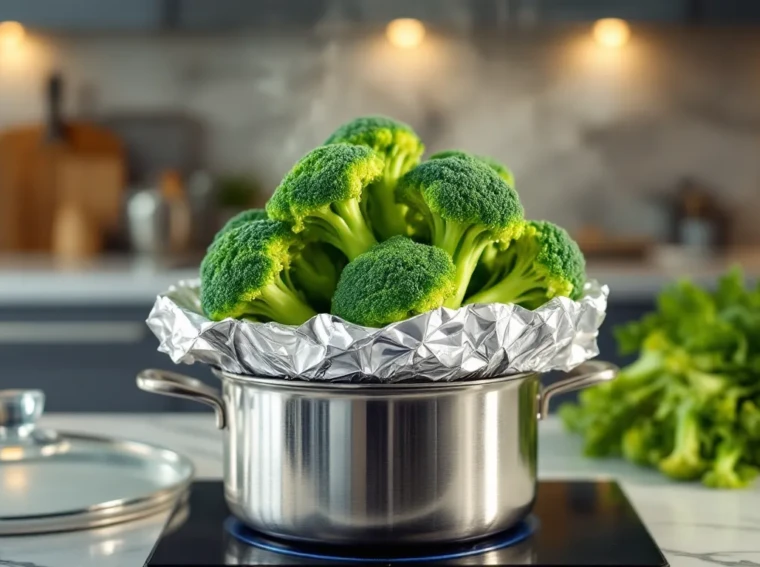
You don’t need fancy kitchen gear to steam broccoli. Whether you’re a health-conscious gamer fueling up between ranked matches or just looking for a quick, nutritious meal prep strategy, steaming broccoli is one of the most reliable ways to lock in nutrients and texture. The problem? Not everyone has a steamer basket lying around. The good news: you’ve got options, probably several of them already in your kitchen. This guide breaks down five practical methods to steam broccoli without a steamer, from the dead-simple boiling approach to microwave speed-runs. Each technique delivers the same result: tender-crisp florets that hold their bright green color and don’t turn into mushy defeat screens.
Key Takeaways
- You can steam broccoli without a steamer using five practical methods: colander-boiling, direct boiling, microwave, oven, pan with foil, or a pressure cooker, each delivering tender-crisp results.
- Steaming broccoli preserves water-soluble vitamins like C and B-complex that are lost in boiling, keeping nutrients locked in and delivering roughly 55 calories, 5.7g protein, and 2.4g fiber per cup.
- For optimal doneness across all steaming methods, aim for tender-crisp texture by cutting broccoli into uniform florets, using medium-high to boiling temperature, and cooking for 3–7 minutes depending on floret size and technique.
- The microwave method requires only 3–4 minutes and works best with uniform floret sizes, while the pressure cooker method is ideal for bulk meal prep, steaming large batches in just 2–3 minutes.
- Test doneness with a fork—properly steamed broccoli should pierce with light resistance and maintain a bright green color, indicating nutrients are intact and the ideal texture has been achieved.
Why Steam Broccoli Instead Of Other Cooking Methods
Steaming broccoli preserves nutrients that boiling destroys. When you boil vegetables directly in water, water-soluble vitamins like C and B-complex leach out into the cooking liquid. Steaming keeps the broccoli suspended above the water, so those nutrients stay locked in where they belong.
The texture payoff is real too. Steamed broccoli stays crisp with a slight bite, that satisfying firmness that makes eating it actually enjoyable. No mushy, oversaturated florets collapsing on your plate. Think of it like the difference between a snappy, responsive control scheme and one with input lag: steaming is the optimized option.
Nutrition-wise, one cup of steamed broccoli delivers roughly 55 calories, 5.7 grams of protein, 11 grams of carbs, and 2.4 grams of fiber. It’s also packed with vitamin C, vitamin K, and potassium, compounds that survive the steam process almost entirely intact. For anyone tracking macros or just trying to eat clean between gaming sessions, steamed broccoli is a top-tier choice.
The Boiling Method: The Simplest Approach
The boiling method is your fallback loadout, no special equipment, no skill check. Two variations exist, and both work.
Using A Colander Or Strainer
This is how to steam broccoli without a steamer basket using tools you definitely already own. Grab a colander or strainer and a regular pot.
- Fill your pot with about 2 inches of water and bring it to a rolling boil.
- Cut your broccoli into uniform florets (roughly 2–3 inches each: consistency matters for even cooking).
- Place your colander or strainer inside the pot so the bottom sits just above the boiling water. The steam rises up, not the water itself.
- Add the broccoli florets to the colander.
- Cover with a lid or even foil to trap the steam.
- Cook for 4–6 minutes depending on floret size. Smaller florets cook faster.
The key detail: the colander or strainer must sit elevated. If it’s actually touching the water, you’re boiling, not steaming. Make sure there’s at least a half-inch gap between the water and the bottom of your colander.
Direct Boiling Technique
Sometimes you skip the colander entirely. This method technically boils rather than steams, but it’s fast and still retains most nutrients if you keep cooking time short.
- Bring a pot of salted water (about 4 cups) to a boil.
- Add broccoli florets directly.
- Cook for 3–4 minutes only. This is critical, every extra minute leaches more vitamins into the water.
- Drain immediately in a colander and shake off excess water.
You’ll lose slightly more nutrients than true steaming, but the time savings and simplicity make this worth it when you’re in a rush. The taste difference is barely noticeable for most people. If you want to recover some of that lost nutrition, save the cooking water for broth or soups later.
The Microwave Method: Quick And Convenient
For speed-runners, the microwave is your ultimate time-saver. Microwave steaming takes 3–4 minutes total and works surprisingly well.
Place your broccoli florets in a microwave-safe bowl or container. Add 2–3 tablespoons of water (just enough to create steam: you’re not trying to boil). Cover the bowl with a microwave-safe lid, plate, or even damp paper towel to trap moisture. Microwave on high for 3–4 minutes. Check for tenderness, and add 30 seconds if needed.
The catch: microwave steaming can be slightly inconsistent. Floret size matters more here than in traditional steaming because microwaves heat unevenly. Cut florets as uniformly as possible to avoid some being mushy while others stay raw. Also, when you remove the bowl from the microwave, the lid will be hot and will release a burst of steam, so be careful with the uncovering, use a towel and angle it away from your face.
This method does create a slightly softer texture than stovetop steaming, but for meal prep or quick side dishes, the trade-off is worth it. Nutritionally, microwave steaming ranks right up there with traditional steaming since the steam still does most of the work.
Steaming In Your Oven
Your oven can function as a steamer if you set it up right. This method uses less water than stovetop methods and works well if you’re already using the oven for something else.
Creating An Oven Steam Chamber
- Preheat your oven to 400°F.
- Place a baking sheet or roasting pan on the middle oven rack.
- Fill it with about 1 inch of water.
- Lay a wire rack or oven-safe grill grate on top of the water (or even crumple foil to create a platform). The broccoli needs to sit above the water, not in it.
- Arrange broccoli florets on the rack in a single layer.
- Cover the whole setup tightly with foil.
- Steam for 8–12 minutes depending on floret size. The enclosed foil traps steam and creates the cooking environment.
The oven method takes longer than stovetop or microwave alternatives, so use it strategically, like when you’re already baking a main dish and want to steam broccoli on the side without heating up another burner. The payoff is even, gentle cooking and minimal water loss, which means more nutrients stay in the broccoli.
One tactical tip: check the water level halfway through. If the oven is running hot or your foil isn’t sealed perfectly, the water can evaporate, and you’ll lose your steam source. A quick peek and a splash of boiling water from a kettle fixes this instantly.
The Pan With Foil Method: An Improvised Steamer
This is the speed-run method for how to steam broccoli without a steamer basket. You need a pan, foil, and about 5 minutes.
Setting Up Your DIY Steamer
- Crumple a ball of aluminum foil roughly the size of your fist. Make it dense enough to hold its shape but not rock-hard.
- Place the foil ball in the bottom of a regular saucepan or skillet.
- Add about 1 inch of water and bring it to a boil.
- Set your broccoli florets on top of the foil. The foil acts as a platform, keeping the broccoli above the boiling water while steam rises all around.
- Cover with a lid or foil tent.
- Steam for 5–7 minutes until the florets are fork-tender.
Tips For Perfect Results
The foil ball method is improvisation at its finest, but consistency comes from a few details. First, make sure the foil platform is stable. If it shifts or tips during cooking, your florets will touch the water and boil instead of steam. A denser foil ball works better than a loose one.
Second, keep your broccoli florets relatively uniform in size. If you have giant florets mixed with tiny ones, the small ones will finish cooking while the large ones are still slightly firm. A quick visual sort takes 10 seconds and prevents disappointing results.
Third, don’t overcrowd the pan. Broccoli needs air circulation to steam properly. If you’re stacking florets or wedging them in too tightly, you’ll get uneven cooking. A single layer is ideal. If you’re steaming multiple servings, do it in batches rather than cramming everything in at once.
Finally, use foil that’s at least a few layers thick for the ball. Thin, single-layer foil can tear under the weight of the broccoli or pinhole during the cooking process.
The Pressure Cooker Approach
If you own an Instant Pot or pressure cooker, this method is a clutch move for bulk meal prep. Pressure cooking is fast and keeps nutrients locked in due to the sealed environment and minimal cooking time.
Add 1 cup of water to your pressure cooker and insert the trivet (that metal rack that came with it). Arrange broccoli florets on the trivet in a single layer. Close the lid and set the pressure cooker to high pressure for 2–3 minutes. Two minutes gives you more tender-crisp texture: three minutes yields softer broccoli. Use natural pressure release (let the pot sit for 10 minutes) rather than quick-release to prevent the broccoli from getting shocked into mushiness.
The advantage here is speed and volume. You can steam a huge batch of broccoli in the same time it takes to do a small batch on the stovetop. For anyone prepping meals for the entire week, a pressure cooker transforms broccoli prep from tedious to efficient. The texture comes out firm and the color stays vibrant green, which signals that nutrients are intact.
One note: pressure cookers heat things aggressively, so the broccoli finishes faster than you’d expect. If this is your first time using a pressure cooker for broccoli, start at 2 minutes and adjust from there. You can always cook it longer next time, but you can’t un-cook mushy broccoli.
Steaming Times And Temperature Guidelines
Cooking times vary based on floret size, your chosen method, and how soft you like your broccoli. Here’s a quick reference:
Stovetop (boiling method with colander): 4–6 minutes for medium florets, 3–4 minutes for small florets, 6–8 minutes for large florets.
Direct boiling: 3–4 minutes (intentionally short to minimize nutrient loss).
Microwave: 3–4 minutes for medium florets. Start at 3 minutes: add 30-second intervals if needed.
Oven steaming: 8–12 minutes at 400°F depending on floret size.
Pan with foil: 5–7 minutes on medium-high heat once water is boiling.
Pressure cooker (high pressure): 2–3 minutes, then natural release for 10 minutes.
The underlying principle is the same across all methods: medium-to-large florets need roughly 5–7 minutes total cook time. Smaller florets need 3–4 minutes. Larger florets need 7–8 minutes. You’re aiming for a texture where the broccoli is tender but still has a slight firmness when you bite it, no mushiness, no crunchiness that feels undercooked.
Temperature-wise, steaming water should be at or near a boil (around 212°F at sea level). If you’re using an oven, 400°F is the standard temperature. The actual temperature of the steam itself is roughly 212°F since steam rises from boiling water. Pressure cookers operate at higher temperatures (around 250°F at high pressure), which is why they cook faster. All of these temperatures are high enough to denature enzymes and preserve the structural integrity of the broccoli while retaining nutrition.
How To Know When Broccoli Is Perfectly Steamed
The fork test is your primary tool. Pierce a floret with a fork. If it goes through with light resistance and the broccoli doesn’t shatter or turn to mush, you’ve hit the mark. The floret should have a slight firmness, that snap that makes eating it satisfying.
Color matters too. Properly steamed broccoli is a bright, vibrant green. If it’s turning dull or yellowish, it’s been cooking too long and nutrients are degrading. That color shift is a visual timer telling you cooking time is almost up.
If you’re steaming for the first time using one of these methods, test doneness at the lower end of the recommended time range and add a minute if needed. This prevents overshooting into mushy territory. Once you’ve done it once or twice, you’ll develop an intuition for how long your specific method takes with your preferred texture.
Broccoli continues to cook slightly from residual heat even after you remove it from the heat source, so if you’re on the fence about whether it’s done, it’s better to err slightly on the side of underdone. You can always microwave it for 30 seconds if it’s still too firm, but you can’t fix overcooked broccoli. Keep in mind that How-To Geek offers detailed tutorials on cooking techniques for all kitchen equipment if you need additional visual references for any of these methods.
Conclusion
You don’t need a dedicated steamer to get perfectly steamed broccoli. The boiling method with a colander works as a quick fallback. The microwave method dominates when you’re in a time crunch. The pan with foil setup handles the DIY requirement. The oven method works when you’re already using the oven. The pressure cooker crushes bulk meal prep. Pick the method that fits your situation, execute the timing correctly, and you’ll consistently hit that ideal tender-crisp texture. Whether you’re using how to steam broccoli without a steamer basket as a survival tactic or building it into your standard meal prep rotation, these five approaches cover every scenario. Focus on keeping floret size consistent, timing based on your chosen method, and stopping before the broccoli turns soft. That’s the full strategy. From there, season it but you like, butter, garlic, soy sauce, whatever fits your diet plan, and you’re locked in.