

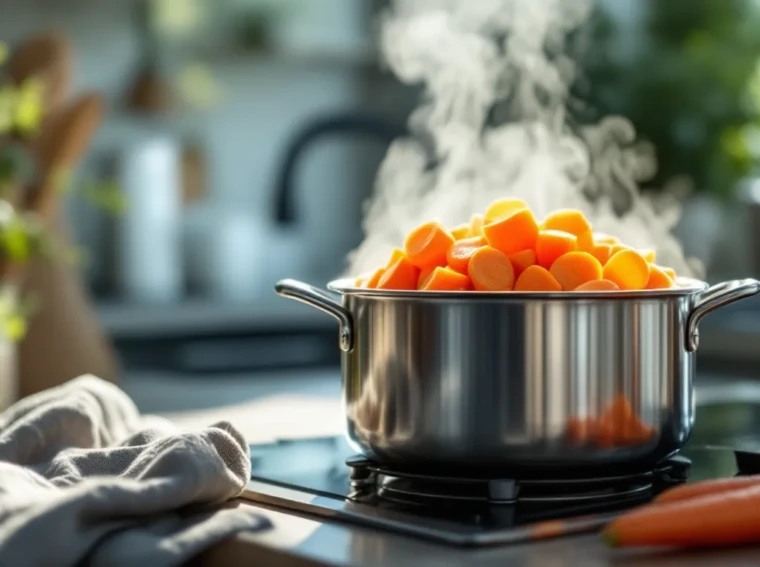
Look, if you’ve been gaming for hours and realized you haven’t eaten anything solid all day, steaming carrots is your comeback move. It’s fast, it’s healthy, and it doesn’t require you to leave your desk for long. Whether you’re a speedrunner optimizing meal prep or just someone who wants to fuel up between ranked matches, knowing how to steam carrots properly makes all the difference between mushy disappointment and perfectly tender vegetables. This guide breaks down every detail, from setup to seasoning, so you can nail the technique every single time and actually enjoy what you’re eating.
Key Takeaways
- Steaming carrots beats other cooking methods by retaining nutrients, maintaining consistent texture, and taking significantly less time than roasting or boiling.
- Uniformly cut carrot pieces and proper water level (1-2 inches below the steamer basket) are essential for even cooking and preventing mushy or crunchy results.
- Steam carrots based on size: baby carrots in 4-5 minutes, regular sliced carrots in 6-8 minutes, and large cut carrots in 8-10 minutes—test for doneness early to avoid overcooking.
- Season steamed carrots after cooking, not before, and pair with simple finishes like butter and herbs, honey glaze, or Asian-style seasonings to enhance natural flavor.
- Batch-steam carrots for meal prep and store in the fridge for 3-5 days or freeze for 2-3 months to maximize nutrition and minimize daily cooking time.
Why Steam Carrots Instead Of Other Cooking Methods
Steaming beats boiling, roasting, and microwaving for one simple reason: speed and nutrient retention. When you boil carrots, they lose water-soluble vitamins into the pot, basically throwing away the good stuff. Roasting takes 30+ minutes at high heat, which doesn’t fit into a quick gaming session. Microwaving is faster, sure, but the texture is often uneven and rubbery.
Steaming keeps carrots in a controlled environment where heat and moisture do the work together. You retain more nutrients, the texture stays consistent throughout, and the natural sweetness comes through without any loss to water. Plus, steamed carrots are genuinely faster than most cooking methods when you’re watching the clock.
If you’re meal prepping for a tournament or just want reliable nutrition without fuss, steaming is the meta choice. It’s not flashy, but it delivers exactly what you need.
Essential Equipment And Ingredients You’ll Need
You don’t need a fancy setup to steam carrots effectively. The basics are straightforward: carrots, water, and something to hold the carrots above the water.
Steaming Equipment Options
Dedicated Steamer Basket – The OG choice. A metal basket that sits inside a pot and holds vegetables above boiling water. They’re cheap (usually under $15), durable, and work for basically anything. If you’re already cooking regularly, grab one.
Microwave Steamer – If speed is your primary stat, microwave steamers are unbeatable. A perforated container with a lid that lets steam circulate. Steam carrots in the microwave in about 5-7 minutes. No stove required. Perfect for dorm rooms, office kitchens, or minimal setups.
Instant Pot or Pressure Cooker – Modern kitchen weapon. Uses steam under pressure to cut steaming time in half. If you already own one, it’s an option, but not essential for basic carrot steaming.
Bamboo Steamer – Traditional, elegant, and honestly overengineered for carrots. Works fine if you have one lying around, but not necessary.
DIY Steamer – Seriously, just use a pot with a metal colander or even aluminum foil as a makeshift platform. Does the job if nothing else is available.
Choosing Quality Carrots
Not all carrots are created equal. Fresh carrots should be firm, if they bend easily or feel soft, they’re past their prime. Look for carrots with smooth skin and no visible blemishes or splits. Orange carrots are standard, but purple, yellow, and white varieties work the same way steaming-wise.
Baby carrots – Smaller and thinner than standard carrots, they steam much faster (about 4-5 minutes) and require zero cutting. If you’re short on time, these are your speed-run option.
Regular carrots – Medium thickness takes 8-12 minutes depending on how you cut them.
Large carrots – Thicker, so you’ll need to cut them into thinner pieces to ensure even cooking. If left whole, they’ll take 15+ minutes.
Store raw carrots in the fridge’s crisper drawer and they’ll stay good for weeks. Don’t need to buy premium brands, regular grocery store carrots work perfectly fine.
Step-By-Step Guide To Steaming Carrots Perfectly
Preparation: Washing And Cutting
First, wash your carrots under cold water to remove any dirt or debris. Use a vegetable brush if you have one, but your hands work fine. You don’t need to peel them, the skin holds nutrients and adds texture. If you prefer peeled carrots, use a vegetable peeler before steaming.
Now, the cut matters. Uniformity is key. If some pieces are thick and others are thin, the thin ones will be mushy when the thick ones are done. Here’s what works:
- Baby carrots: Leave whole or halve them lengthwise.
- Regular carrots: Cut into coins about ¼-inch thick, or cut lengthwise into thin sticks.
- Large carrots: Slice thin (¼-inch) or cut into matchsticks to speed up cooking.
The thinner you cut them, the faster they cook. This is your direct control over steaming time. Keep sizes consistent within a batch.
Setting Up Your Steamer And Water Level
This part is straightforward but easy to mess up. Fill your pot with water, about 1-2 inches deep. The water should NOT touch the carrots when they’re on the steamer basket. You want steam rising around them, not boiling water splashing them.
Place the steamer basket in the pot and bring the water to a boil over medium-high heat. Listen for it, a rolling boil creates steady steam production. If the heat is too low, you’ll get weak steam and longer cooking times. Too high wastes energy and can boil the water away too fast.
Once steam is actively rising, carefully add your prepared carrots to the basket in a single layer. Don’t overcrowd them. If they’re packed tight, steam won’t circulate evenly and you’ll get uneven cooking. If they don’t fit in one layer, work in batches.
Cover the pot immediately. This traps heat and steam. For a microwave steamer, just cover with the lid and microwave on high.
Steaming Times Based On Carrot Size
Timing is where precision matters. Here’s the breakdown for how long it takes to steam carrots:
Baby carrots: 4-5 minutes. Test at 4 minutes, they should be tender but still have a slight bite.
Regular carrots, sliced thin (¼-inch): 6-8 minutes. Start checking at 6.
Regular carrots, cut into sticks: 7-9 minutes.
Whole regular carrots: 12-15 minutes. Not recommended unless you like them very soft.
Large carrots, sliced thin: 8-10 minutes.
Microwave steaming: 5-7 minutes for baby carrots, 7-10 minutes for sliced regular carrots. Start at 5 and add time in 1-minute increments.
How to test doneness: Poke a piece with a fork. It should be tender but not falling apart. There’s a window here, a minute too short and they’re crunchy (fine if you like that), a minute too long and they’re mushy (not ideal). Your preference matters, so start testing early and adjust next time.
Remove the carrots from heat and drain any excess moisture if they look waterlogged. If steaming in a microwave, let them sit for a minute before uncovering to avoid steam burns.
Advanced Techniques And Flavor Enhancements
Basic steaming works, but a few tweaks elevate the whole experience.
Infusing Broth And Aromatics Into Your Steam
Instead of plain water, use vegetable or chicken broth. The steam carries flavor directly into the carrots as they cook. This is a low-effort, high-impact change. Use the same water level as you would with plain water.
Add aromatics to the water: a bay leaf, a few peppercorns, crushed garlic cloves, or ginger slices. These don’t infuse heavily but add subtle depth. You can even add fresh herbs like thyme or rosemary. The steam picks up these flavors without them directly touching the carrots.
For microwave steaming, add a splash of broth directly to the steamer container with the carrots. Same effect, faster result.
Seasoning And Finishing Touches
Steamed carrots are a blank canvas. Here’s what works:
Simple finish: Toss with a little butter or olive oil, salt, and black pepper. That’s it. Sometimes simple is best.
Honey-glazed: Drizzle with honey and a pinch of sea salt immediately after steaming. The residual heat softens everything together.
Garlic and herb: Mix in minced fresh garlic, chopped parsley, or cilantro, plus a squeeze of lemon juice.
Asian-style: Finish with sesame oil, soy sauce, and a pinch of red pepper flakes or sriracha.
Parmesan: Toss with grated Parmesan cheese and fresh herbs while still warm.
Always season after steaming, not before. Salt draws moisture out and can make them cook unevenly. Add finishing oil or butter right before eating so flavors stay bright.
If you’re prepping multiple meals, steam plain and season individual portions to keep options open. This is meal-prep optimization, maximize flexibility with minimal extra effort.
Common Mistakes To Avoid When Steaming Carrots
Uneven sizing – The biggest one. Cut pieces inconsistently and some finish while others are still crunchy. Spend 30 seconds making sure all pieces are roughly the same thickness. It makes a massive difference.
Water touching the carrots – This isn’t steaming anymore: it’s boiling. Boiling leaches nutrients and ruins texture. Keep water 1-2 inches below the basket.
Overcrowding the basket – Carrots need steam space. Pack them too tight and the bottom ones steam while the top ones cook unevenly. Use multiple batches if needed. Think of it like spacing in a raid, everyone needs breathing room.
Insufficient heat – Weak steam = longer cooking times and mushy carrots. Keep the heat at medium-high to maintain a rolling boil. If steam production dies down, crank it up.
Not checking for doneness – Every stove is different, elevation matters, and carrot thickness varies. Start testing 1-2 minutes before your expected time. This one-minute difference is the difference between perfect and ruined.
Forgetting the lid – An uncovered pot loses steam fast. You’ll be cooking longer and using way more energy. Cover immediately after adding carrots.
Seasoning too early – Salt before steaming draws moisture and makes cooking uneven. Season after. Same goes for acidic ingredients like lemon juice, add them at the end.
Letting water boil away completely – If the water level gets too low, the pot can scorch and taste bad. Check water level before steaming if you’re doing a long session. Refill if necessary (carefully, don’t splash).
Storing And Reheating Steamed Carrots
Steamed carrots keep in the fridge for 3-5 days in an airtight container. Let them cool to room temperature first, then store. The longer they sit, the softer they get, so early consumption is ideal if you like texture.
Reheating options:
Microwave – 1-2 minutes in a microwave-safe container. Quick and effective. Check halfway through.
Stovetop – Heat in a pan over medium heat with a splash of water or broth for 2-3 minutes. Gentle and maintains texture better than microwaving.
Don’t overreheat – Reheated carrots get softer with each pass. Aim for just warm through, not hot.
If you’ve stored them plain (no seasoning), add flavor during reheating. This keeps them fresh-tasting even a few days in.
Freezing – Steamed carrots freeze okay but get slightly softer when thawed. Good option if you’re batch-prepping weeks ahead. Freeze in portions on a tray first, then transfer to bags. They’ll last 2-3 months frozen. Thaw in the fridge overnight or reheat straight from frozen (adds 1-2 minutes to reheating time).
For gamers doing meal prep, batch-steaming on Sunday and portioning out daily meals is legitimately time-efficient. Spend 15 minutes steaming a week’s worth of carrots, season as needed throughout the week, and you’ve got consistent nutrition without daily cooking. That’s optimization.
Conclusion
Steaming carrots isn’t complicated, but nailing the execution takes focus on a few key variables: cut size, water level, heat consistency, and timing. Get these right and you’ll have perfectly tender carrots every time. The method is also flexible, adjust it to your schedule and available equipment. Microwave, stovetop, pressure cooker, or bamboo steamer all work. The underlying mechanics stay the same.
Once you’ve got steaming down, you can build from there. Infuse broths, add aromatics, and experiment with finishing flavors. But start with the fundamentals: consistent sizes, proper steam, and early testing. That’s your foundation.
For anyone eating between gaming sessions or prepping meals for the week, steamed carrots are legitimately the reliability pick. Fast, nutritious, storage-friendly, and zero fuss. Less time in the kitchen means more time doing what matters. Master the technique and you’re set.